
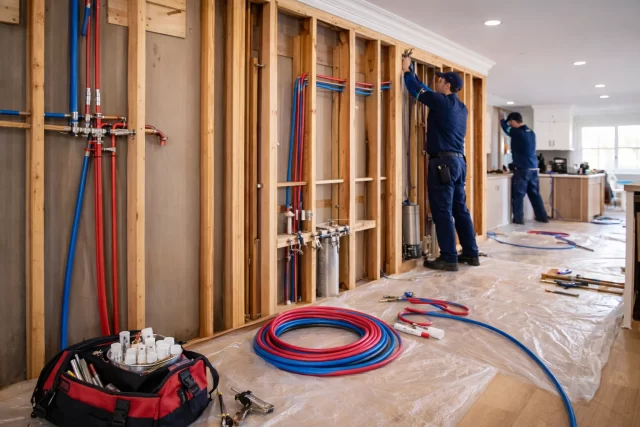
If your South Florida home was built before 1990, there’s a good chance your plumbing system is living on borrowed time. Polybutylene pipes, galvanized steel, and even early copper installations from that era are reaching the end of their lifespan—and the signs of failure aren’t always obvious until it’s too late.
Whole house repiping is a significant investment, but it’s often more cost-effective than dealing with repeated leaks, water damage, and emergency repairs. This guide will help you understand when repiping is necessary, what it costs in South Florida, and what to expect during the process.
What Are the Signs Your Home Needs Repiping?
Signs your home needs repiping include frequent leaks in different locations, discolored or rusty water, low water pressure throughout the house, visible pipe corrosion, water that tastes or smells metallic, and pipes made of polybutylene or galvanized steel. If your home is over 30 years old and experiencing multiple plumbing issues, a professional inspection can determine if repiping is necessary.
Warning Signs to Watch For
- Multiple leaks: If you’re fixing leaks in different areas of your home, the entire system may be failing.
- Discolored water: Brown, yellow, or rusty water indicates pipe corrosion from the inside.
- Low water pressure: Mineral buildup and corrosion restrict water flow throughout the system.
- Visible corrosion: Green stains on copper, white deposits, or flaking on exposed pipes.
- Metallic taste: Water that tastes or smells like metal signals pipe deterioration.
- Frequent clogs: Corroded pipes catch debris and mineral deposits more easily.
- Water temperature fluctuations: Inconsistent hot water can indicate failing supply lines.
Problem Pipe Materials Common in South Florida Homes
South Florida’s housing boom from the 1960s through 1990s left many homes with pipe materials we now know are problematic. Here’s what to look for:
Polybutylene Pipes (1978-1995)
These gray or blue plastic pipes were marketed as the “pipe of the future” but turned out to be a disaster. The Consumer Product Safety Commission documented widespread failures after exposure to chlorine in municipal water—a major concern in South Florida where water treatment relies heavily on chlorination.
How to identify: Gray, blue, or black plastic pipes, typically 1/2″ to 1″ diameter, often with copper or brass fittings. Check under sinks, at the water heater, and where pipes enter the home.
Galvanized Steel Pipes (Pre-1960)
Galvanized pipes were standard in homes built before 1960. The zinc coating that protects the steel eventually wears away, allowing rust to form inside the pipe. This rust restricts water flow and contaminates your water supply. Most galvanized pipes have a lifespan of 40-50 years—meaning any still in service are well past their expected life.
How to identify: Gray metal pipes that may show rust or white mineral deposits. A magnet will stick to galvanized steel but not to copper or plastic.
Early Copper Pipes (1950s-1970s)
While copper is generally durable, early installations in South Florida face unique challenges. Our aggressive water chemistry and high mineral content can cause pinhole leaks in copper pipes, especially in homes with recirculating hot water systems. If you’re seeing green stains on pipes or recurring pinhole leaks, the copper may be failing.
How Much Does Whole House Repiping Cost in South Florida?
Whole house repiping in South Florida typically costs between $5,000 and $15,000 for a standard single-family home. The final price depends on home size, number of fixtures, accessibility of pipes, and the material you choose for replacement.
| Home Size | PEX Repiping | Copper Repiping |
|---|---|---|
| Small (1-2 bath) | $4,000 – $6,000 | $6,000 – $9,000 |
| Medium (2-3 bath) | $6,000 – $10,000 | $9,000 – $14,000 |
| Large (3+ bath) | $10,000 – $15,000 | $14,000 – $20,000+ |
Factors that affect cost: Single-story vs. multi-story (attic access vs. cutting walls), slab foundation vs. crawl space, number of fixtures, permit requirements, and drywall repair after installation.
PEX vs Copper: Which Is Better for South Florida?
Most repiping projects today use either PEX (cross-linked polyethylene) or copper. Both are excellent choices, but each has advantages for South Florida conditions:
PEX Piping
PEX has become the preferred choice for most residential repiping projects. According to the Plastic Pipe and Fittings Association, PEX offers several advantages for South Florida homes:
- Corrosion resistant: Won’t corrode from aggressive water chemistry
- Flexible installation: Snakes through walls with fewer fittings and connections
- Quieter operation: Eliminates water hammer and pipe noise
- Lower cost: Material and labor costs are typically 30-40% less than copper
- Freeze resistant: Expands without bursting (relevant for rare Florida freezes)
Copper Piping
Copper remains a premium choice with its own benefits:
- Proven longevity: 50+ year lifespan when properly installed
- Antibacterial properties: Naturally inhibits bacterial growth in water
- UV resistant: Can be used for outdoor exposed applications
- Higher resale perception: Some buyers prefer copper’s reputation
Our recommendation: For most South Florida homes, we recommend PEX for its corrosion resistance, faster installation, and lower cost. Copper is an excellent choice if you prefer its longevity and don’t mind the higher investment.
What to Expect During the Repiping Process
- Inspection and estimate: We assess your current plumbing, identify all fixtures, and provide a detailed written estimate.
- Permits: We pull required permits with your local building department.
- Protection: Furniture and flooring are covered to prevent damage.
- Access points: Small openings are made in walls and ceilings to route new pipes.
- New pipe installation: New lines are run to all fixtures, typically through attic or wall cavities.
- Connection and testing: Fixtures are connected, system is pressurized, and we check for leaks.
- Inspection: City inspector verifies work meets code before walls are closed.
- Drywall repair: Access holes are patched (painting typically homeowner responsibility).
- Final walkthrough: We test every fixture with you and answer any questions.
Timeline: Most whole-house repiping projects take 2-4 days depending on home size and complexity. Water is typically off for portions of each day but restored each evening.
Benefits of Repiping Your South Florida Home
- Eliminate leaks: No more emergency repairs or water damage worries
- Better water quality: Clean, clear water without rust or metallic taste
- Improved water pressure: New pipes deliver full flow to all fixtures
- Lower insurance rates: Many insurers offer discounts for updated plumbing
- Increased home value: Modern plumbing is a selling point for buyers
- Peace of mind: New pipes typically carry 25+ year warranties
Get a Free Repiping Estimate
Concerned about your home’s plumbing system?
Morata Plumbing provides free repiping inspections and estimates throughout South Florida.
We’ll assess your pipes, explain your options, and give you honest advice—even if repiping isn’t necessary yet..
Call (786) 238-7748
Serving Miami, Fort Lauderdale, Boca Raton, and all of South Florida
Visit morataplumbingmiami.com
