
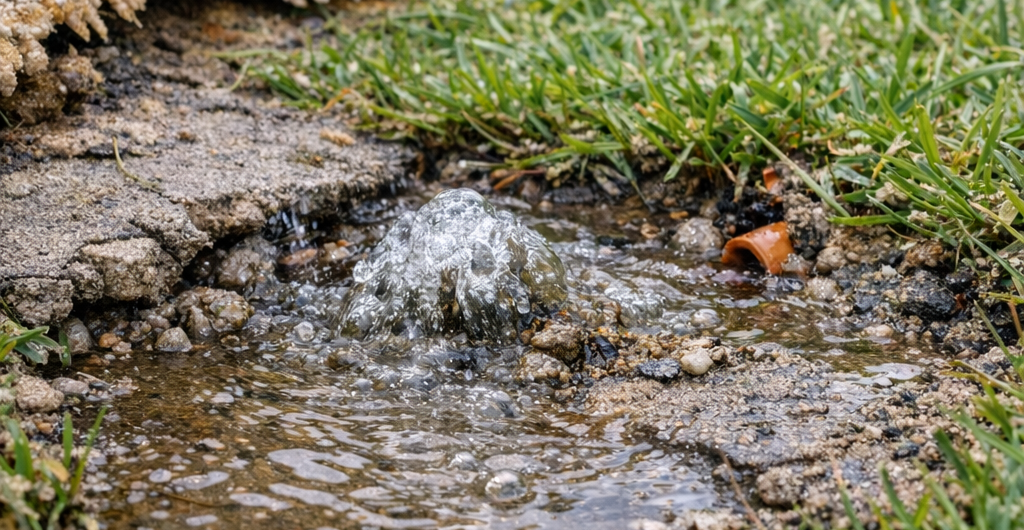
Underground pipe leaks are among the most expensive and destructive plumbing problems a homeowner can face, and they are notoriously difficult to find. Unlike a dripping faucet or a running toilet, a leak buried two to four feet below your yard, driveway, or slab produces no visible symptoms for weeks or months while it quietly erodes soil, undermines foundations, wastes thousands of gallons of water, and drives up utility bills.
Nationally, household leaks waste nearly one trillion gallons of water per year, and water damage claims cost insurers approximately $13 billion annually. In South Florida, the risk is amplified by porous limestone bedrock, a high water table, and mineral-rich soil that accelerates corrosion.
Whether it’s a cracked water main, a deteriorating sewer lateral, or a failing irrigation line, underground leaks require professional detection technology—and Morata Plumbing brings the best in the industry to every call.
Types of Underground Pipes That Leak in South Florida Homes
Water Service Line (Meter to House)
This pressurized pipe runs from the utility meter to your home, typically 18–36 inches deep. Older Miami homes often use copper or galvanized steel; newer homes may use PVC, CPVC, or PEX. Because it is pressurized 24/7, even a small crack can waste hundreds of gallons per day.
Under-Slab Water Lines
Water supply lines in slab-on-grade homes run directly under the concrete foundation. These require specialized acoustic detection to locate leaks without demolition.
Sewer and Drain Laterals
Sewer laterals run 2–4 feet deep and may be cast iron, Orangeburg, or PVC. Root intrusion, corrosion, and collapse are common failure points in South Florida.
Irrigation and Sprinkler Lines
Buried 6–12 inches below the surface, irrigation leaks can waste large volumes of water and cause soil erosion, sinkholes, and foundation saturation.
Why Underground Leaks Are So Difficult to Detect
Underground leaks present unique challenges:
- No visual access — Pipes are buried under soil, concrete, or landscaping.
- Delayed symptoms — Water spreads through soil before surfacing.
- Soil masking — Sandy, porous soil absorbs water quickly.
- Multiple buried systems — Supply, sewer, and irrigation lines overlap.
- Depth variability — Deeper leaks produce different acoustic signatures.
Digging without detection is the most expensive mistake homeowners make. A single exploratory trench in the wrong location can cost $500–$2,000 and still miss the leak.
Professional Underground Leak Detection Methods
| Detection Method | How It Works | Best Used For |
|---|---|---|
| Acoustic Leak Detection | Microphones detect the sound of water escaping pressurized pipes. Frequency filtering isolates leak noise. | Pressurized water lines under slabs, yards, and driveways. |
| Electronic Pipe Tracing | A transmitter sends a signal through the pipe; a receiver maps its path above ground. | Locating buried pipe routes before acoustic pinpointing. |
| Thermal Imaging | Infrared cameras detect temperature differences caused by water saturation. | Hot water leaks and large-area scanning. |
| Pressure Testing | Systems are isolated and pressurized; pressure drop confirms a leak. | Identifying which system is leaking. |
| Video Camera Inspection | A camera inspects sewer and drain interiors for cracks, roots, and collapses. | Sewer lateral diagnostics. |
| Ground Penetrating Radar (GPR) | Radar detects subsurface anomalies, voids, and pipe locations. | Locating non-metallic pipes and soil voids. |
Morata Plumbing combines electronic pipe tracing with acoustic detection using the Goldak 4360 for unmatched accuracy.
Common Causes of Underground Pipe Failure in South Florida
Pipe Corrosion
Mineral-rich soil and aggressive water chemistry corrode copper and galvanized steel from the outside in.
Tree Root Intrusion
Roots from ficus, banyan, and palms penetrate sewer and irrigation lines, causing blockages and cracks.
Ground Shifting and Settlement
Limestone substrate and fluctuating water tables cause soil movement that stresses buried pipes.
Aging Pipe Materials
Polybutylene, Orangeburg, and cast iron pipes fail frequently in older Miami homes.
Construction and Excavation Damage
Landscaping, fencing, and pool projects often damage buried pipes without immediate symptoms.
What to Expect During Professional Underground Leak Detection
- Initial assessment — Reviewing symptoms, water bills, and visible indicators.
- System isolation & pressure testing — Identifying which system is leaking.
- Electronic pipe tracing — Mapping the pipe’s exact route.
- Acoustic leak detection — Pinpointing the leak using frequency-filtered microphones.
- Precision marking — Marking the exact dig point.
- Findings report — Clear diagnosis and repair options.
Most underground leak detection visits take 1–3 hours.
Underground Leak Detection and Repair Costs in Miami
| Service | Cost Range | Average |
|---|---|---|
| Underground Leak Detection | $150–$600 | $350 |
| Water Service Line Repair | $300–$2,000 | $1,000 |
| Water Service Line Replacement | $1,500–$5,000 | $3,000 |
| Sewer Lateral Repair | $1,000–$4,000 | $2,500 |
| Sewer Lateral Replacement | $3,000–$10,000 | $6,000 |
| Irrigation Line Repair | $100–$500 | $250 |
| Excavation & Restoration | $500–$3,000 | $1,500 |
Professional detection prevents costly exploratory digging and pays for itself immediately.
How to Protect Your Underground Pipes in South Florida
- Monitor your water bill monthly for unexplained increases.
- Check your water meter quarterly with all fixtures off.
- Schedule annual leak detection for homes 20+ years old.
- Plant large trees away from known pipe routes.
- Locate utilities before landscaping or construction.
- Consider proactive repiping for aging copper or polybutylene systems.
Schedule Underground Leak Detection Across Miami-Dade & Broward
If you’re seeing wet spots in your yard, rising water bills, or low pressure, Morata Plumbing’s advanced underground detection technology finds the problem fast—and finds it right. Call (786) 238-7748 or visit morataplumbingmiami.com to schedule service.
