
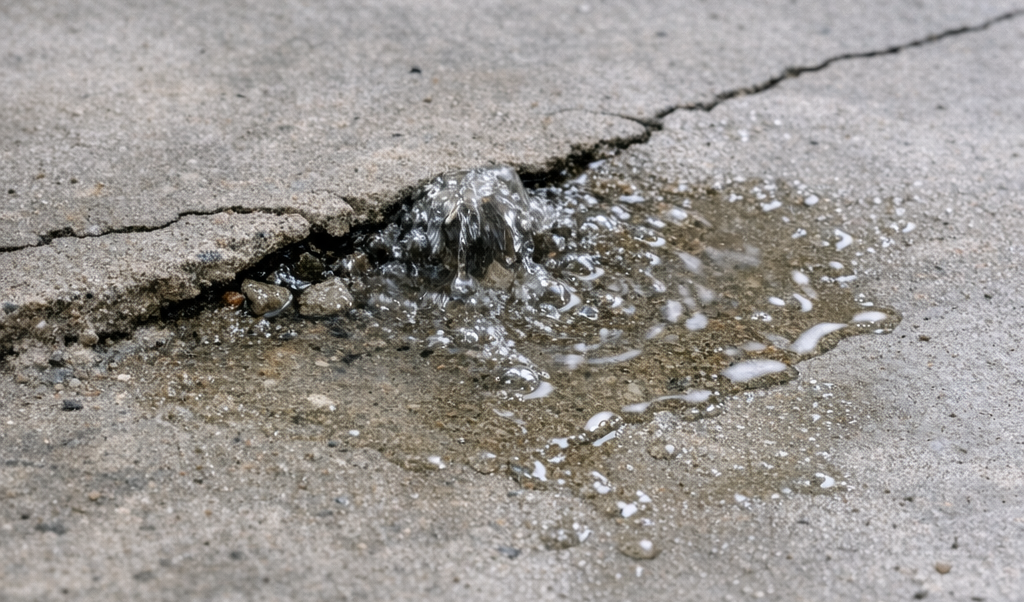
Slab leaks are among the most expensive and disruptive plumbing emergencies a homeowner can face. The average slab leak repair costs approximately $2,280, but complex repairs can exceed $6,750 once concrete demolition, pipe repair, and foundation restoration are included. Detection alone typically runs $150–$600, but it is the most critical step: accurate detection prevents unnecessary demolition and ensures a single, precise repair.
In Miami, slab leaks are not just possible—they are common in homes with aging plumbing. Most Miami-Dade and Broward homes are built on slab-on-grade foundations with copper water lines running directly under the concrete. South Florida’s corrosive soil chemistry, limestone substrate, high water table, and constant moisture exposure accelerate pipe deterioration far faster than in other regions.
This guide explains why slab leaks happen so frequently in Miami, how to spot early warning signs, what detection and repair cost, and how Morata Plumbing’s Goldak 4360 technology locates leaks without damaging your home.
Why Miami Homes Are Especially Vulnerable to Slab Leaks
Miami’s geology, climate, and construction style create ideal conditions for under-slab pipe failure. Here’s why slab leaks are more common here than in most U.S. cities.
Slab-on-Grade Construction Dominates South Florida
Because of South Florida’s high water table and limestone-heavy soil, basements are rare. Nearly every home in Miami-Dade and Broward is built on a concrete slab poured directly on the ground. Water supply lines and drain lines run under or through that slab, leaving no access point except through the concrete itself.
Corrosive Soil and Limestone Substrate
Miami’s limestone foundation and mineral-rich soil accelerate corrosion in copper piping. Soil shifting and settling also stress pipe joints and bends, increasing the likelihood of cracks and pinhole leaks.
High Water Table and Constant Moisture
South Florida’s water table often sits just a few feet below the surface. Pipes under your slab are surrounded by constant moisture, which corrodes copper from the outside while water chemistry corrodes it from the inside.
Aging Pipe Materials
Homes built between the 1960s and 1990s commonly used copper or polybutylene piping—both prone to corrosion and premature failure. If your home still has original under-slab plumbing, slab leak risk increases significantly with age.
7 Warning Signs of a Slab Leak in Your Miami Home
| # | Warning Sign | What It Means |
|---|---|---|
| 1 | Water bill spikes | Even a small slab leak can waste hundreds of gallons daily. A 1/8-inch crack can leak up to 250 gallons per day. |
| 2 | Warm or hot floor spots | Leaking hot water lines heat the concrete slab, creating warm areas under tile or hardwood. |
| 3 | Sound of running water | A hissing or rushing sound with all fixtures off indicates a pressurized line leak under the slab. |
| 4 | Mold or musty odors | Moisture from slab leaks migrates upward, creating ideal conditions for mold growth within 24–48 hours. |
| 5 | New cracks in walls or floors | Water saturation erodes soil under the slab, causing foundation movement and cracking. |
| 6 | Low water pressure | A leak in the main supply line diverts water away from fixtures throughout the home. |
| 7 | Water meter movement | If the meter spins with everything off, water is escaping somewhere—often under the slab. |
Even a small slab leak can cause thousands in structural damage if ignored.
What Does Slab Leak Detection and Repair Cost in Miami?
Here are typical Miami-area slab leak detection and repair costs based on 2025–2026 data:
| Service | Typical Cost Range | Average |
|---|---|---|
| Professional Leak Detection | $150–$600 | $280 |
| Spot Repair | $200–$1,500 | $800 |
| Pipe Rerouting | $1,500–$5,000 | $3,000 |
| Full Pipe Replacement | $500–$2,000 | $1,200 |
| Concrete Slab Repair | $300–$6,750 | $1,500 |
| Total Typical Project | $630–$4,400 | $2,280 |
| Whole-House Repipe | $4,000–$15,000+ | $8,000–$10,000 |
Why Detection Accuracy Matters
Accurate detection prevents unnecessary demolition and saves $1,000–$3,000+ in avoidable repairs. The diagnostic fee is small compared to the cost of cutting into the wrong area of your slab.
Slab Leak Repair Options: Which Is Right for Your Home?
Spot Repair (Direct Access)
Concrete is opened directly above the leak, the pipe is repaired, and the slab is restored. Best for isolated leaks.
Pipe Rerouting
The leaking under-slab line is abandoned and rerouted through walls or ceilings. Eliminates future slab leak risk.
Epoxy Pipe Lining
A protective epoxy coating seals small leaks and prevents future corrosion without slab demolition.
Whole-House Repipe
For homes with widespread corrosion or polybutylene piping, a full repipe eliminates all future leak risk.
How Morata Plumbing Detects Slab Leaks with the Goldak 4360
Morata Plumbing uses the Goldak 4360 Pipe & Leak Detector—the industry’s top-rated acoustic leak detection and pipe locating system—for every slab leak service call.
- Symptom assessment — Reviewing water bills, visible damage, and homeowner observations.
- Electronic pipe tracing — Mapping the exact path of under-slab water lines.
- Acoustic leak detection — Using high-sensitivity microphones and frequency filtering (20Hz–3.5KHz).
- Precision marking — Marking the exact leak location on the floor surface.
- Transparent findings report — Clear explanation of leak severity and repair options.
The entire process takes 1–2 hours and requires zero demolition.
Frequently Asked Questions About Slab Leaks in Miami
How quickly should I address a suspected slab leak?
Immediately. Delays can double repair costs and cause foundation damage.
Will my homeowner’s insurance cover a slab leak?
Many policies cover sudden, accidental leaks and access through the slab, but not the pipe repair itself.
Can slab leaks cause mold?
Yes. Mold can begin growing within 24–48 hours in Miami’s humid climate.
How long does slab leak detection take?
Professional detection with the Goldak 4360 takes 1–2 hours and is completely non-invasive.
Are homes built in the 1980s at higher risk?
Yes. Homes from the 1960s–1990s often used copper or polybutylene piping, both prone to failure.
Schedule Slab Leak Detection in Miami Today
If you suspect a slab leak in your Miami-Dade or Broward home, call (786) 238-7748 or visit morataplumbingmiami.com to schedule professional slab leak detection with the Goldak 4360.
