
Fort Lauderdale is known as the “Venice of America” for good reason. The city contains 165 miles of navigable canals and over 300 miles of total waterways, with thousands of homes built directly on or adjacent to water. That proximity to water is what makes Fort Lauderdale one of the most desirable places to live in South Florida—and it is also what makes its homes especially vulnerable to plumbing leaks and water damage.
Across Broward County, plumbing failures account for an estimated 52% of all water damage insurance claims (Insurance Institute for Business & Home Safety). The county receives approximately 60 inches of rainfall annually, maintains a water table that sits just feet below the surface in many neighborhoods, and faces increasing saltwater intrusion that accelerates pipe corrosion in coastal properties. Meanwhile, much of the housing inventory—from the historic estates of Rio Vista and Las Olas Isles to the mid-century homes of Imperial Point, Tarpon River, and Shady Banks—was built between the 1940s and 1970s with plumbing materials that are now 50–80+ years old.
Whether you live in a waterfront estate on the Intracoastal, a 1960s ranch in Wilton Manors, or a newer home in Weston or Pembroke Pines, professional leak detection technology is the fastest, most cost-effective way to find and fix plumbing problems before they escalate into major water damage events.
Why Fort Lauderdale and Broward County Face Unique Leak Detection Challenges
Not all plumbing environments are equal. Fort Lauderdale and surrounding Broward communities present a combination of factors that make leaks more likely to occur, harder to find, and more damaging when left undetected:
High Water Table
Broward County’s water table sits as little as 2–4 feet below the surface in many areas, and even closer in waterfront and canal-adjacent properties. This means underground pipes are in constant contact with groundwater, accelerating external corrosion. It also means that underground leaks can be masked by the natural presence of water in the soil—making detection without professional acoustic equipment nearly impossible.
Saltwater Intrusion and Coastal Corrosion
Properties along Fort Lauderdale Beach, the Intracoastal Waterway, and the canal systems face salt-laden air and, increasingly, saltwater intrusion into the groundwater supply. Salt accelerates corrosion of copper, galvanized steel, and cast iron pipes both externally and internally. Coastal Broward properties often experience pipe failure 10–20 years earlier than inland homes with identical materials.
165 Miles of Canal-Adjacent Plumbing
Thousands of Fort Lauderdale homes were built on finger islands and canal-front lots where plumbing runs through soil that is permanently saturated or subject to tidal influence. These conditions create constant moisture exposure on pipe exteriors and can cause ground movement that stresses joints and connections—particularly during king tide events and heavy rain seasons.
Aging Housing Inventory
| Era | Neighborhoods Built | Plumbing Materials Used |
|---|---|---|
| 1920s–1940s | Sailboat Bend, Rio Vista, Las Olas Isles, Himmarshee | Galvanized steel, early cast iron, lead joints. Most original plumbing has been replaced, but remnants persist in some properties. |
| 1948–1970 | Shady Banks, Tarpon River, Imperial Point, Victoria Park, Coral Ridge, Lauderdale Isles | Cast iron drain/sewer lines, copper supply lines, some galvanized steel. Cast iron pipes (50–75 year lifespan) are now at or past expected service life. |
| 1970s–1990s | Coral Springs, Plantation, Tamarac, Sunrise, western Broward suburbs | Copper supply, PVC drain lines, some polybutylene (1980s–early 1990s). Polybutylene is prone to premature failure and is no longer manufactured. |
| 2000s–Present | Weston, Pembroke Pines, Miramar, Davie (newer developments) | PVC, CPVC, PEX supply lines. Generally lower leak risk, though connection failures and construction defects still occur. |
Homes built between 1948 and 1975 are in the highest-risk category for leak failures in Broward County. Cast iron drain pipes from this era have reached or exceeded their expected lifespan, and copper supply lines are showing widespread pinhole corrosion from decades of exposure to South Florida’s aggressive water chemistry.
Year-Round Heat and Humidity
Broward County’s subtropical climate means moisture from hidden leaks does not evaporate—it accumulates. Mold can begin colonizing behind walls within 24–48 hours of moisture exposure (FEMA), and the warm, humid environment accelerates growth far beyond what homeowners in drier climates experience.
Advanced Leak Detection Technology for Broward County Homes
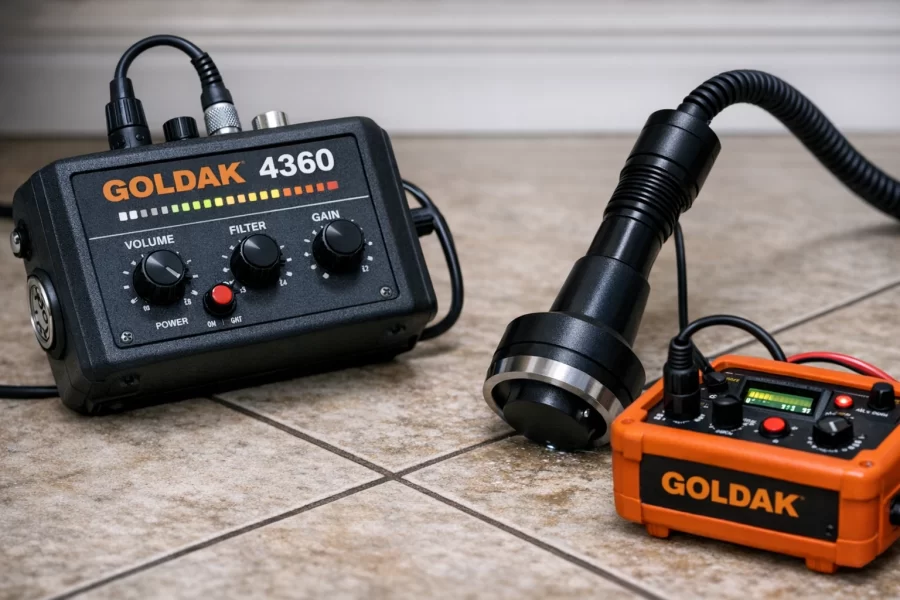
Acoustic Detection with the Goldak 4360
The Goldak 4360 is the industry’s top-rated combination leak detector and pipe locating system. Its high-sensitivity microphones detect the sound of water escaping pressurized pipes through walls, floors, and underground soil.
Electronic Pipe Tracing
Many older Fort Lauderdale homes have undergone multiple renovations, additions, and partial repipes over the decades. Original plumbing diagrams rarely exist. The Goldak’s integrated electromagnetic pipe locator traces the exact path of buried and concealed pipes—even when multiple pipe materials overlap.
Infrared Thermal Imaging
Thermal cameras detect temperature differences on surfaces caused by moisture behind walls, above ceilings, and beneath floors. This is especially valuable for large waterfront homes and multi-story properties.
Pressure Isolation Testing
Before deploying acoustic or thermal detection, each plumbing system is isolated and tested to confirm which system is leaking. This eliminates guesswork and focuses the investigation.
Video Camera Inspection
For sewer laterals, drain lines, and cast iron waste pipes, waterproof cameras inspect pipe interiors for corrosion, root intrusion, joint separations, and collapse.
Most Common Leak Types in Fort Lauderdale and Broward County
Cast Iron Pipe Corrosion and Failure
Cast iron drain and sewer pipes in homes built before 1975 are now experiencing widespread failure due to age and corrosion.
Copper Pinhole Leaks
Copper supply lines from the 1960s–1990s are developing pinhole leaks due to internal pitting corrosion accelerated by South Florida’s water chemistry.
Slab Leaks
Slab-on-grade homes in Broward County often experience leaks in water lines running through or under the concrete slab.
HVAC Condensate Leaks
AC systems operate nearly year-round, producing large volumes of condensation. Clogged or damaged condensate systems cause hidden water damage.
Waterfront and Pool Plumbing Leaks
Dock plumbing, boat lifts, pool systems, and outdoor shower feeds add leak points that require specialized detection.
Broward County Communities We Serve
| Fort Lauderdale Area | Central & West Broward | South Broward |
|---|---|---|
| Fort Lauderdale, Las Olas Isles, Rio Vista, Victoria Park, Coral Ridge, Imperial Point, Lauderdale-by-the-Sea, Wilton Manors, Oakland Park, Lauderdale Lakes, Lauderhill | Coral Springs, Plantation, Sunrise, Tamarac, Davie, Weston, Cooper City, North Lauderdale, Margate, Coconut Creek, Deerfield Beach | Hollywood, Pembroke Pines, Miramar, Hallandale Beach, Dania Beach, Pompano Beach, Lighthouse Point, Hillsboro Beach, Sea Ranch Lakes, Parkland |
What to Expect When You Call for Leak Detection in Fort Lauderdale
- Same-day or next-day scheduling: 24/7 emergency availability and fast non-emergency appointments.
- Initial property assessment: Review of water bills, visible indicators, and plumbing layout.
- System isolation and pressure testing: Each system is tested individually to confirm the leak source.
- Multi-technology detection: Acoustic, thermal, pipe tracing, and moisture metering.
- Precision marking and diagnosis: Leak location is marked and repair options explained.
- Repair and restoration coordination: We coordinate with restoration pros when needed.
Leak Detection and Repair Costs in Broward County
| Service | Cost Range | Average |
|---|---|---|
| Non-Invasive Leak Detection | $150–$600 | $350 |
| Pipe Repair (behind wall/ceiling) | $200–$1,500 | $600 |
| Slab Leak Repair (spot/reroute) | $500–$4,000 | $2,000 |
| Cast Iron Pipe Replacement (section) | $1,000–$5,000 | $2,500 |
| Whole-House Repipe | $4,000–$15,000+ | $8,500 |
| Drywall & Ceiling Restoration | $300–$1,500 | $700 |
| Mold Remediation | $375–$7,000 | $2,500 |
Early detection is the best investment: a $350 detection visit that catches a $600 pipe repair prevents a $3,000–$7,000+ mold and water damage restoration project.
Frequently Asked Questions: Fort Lauderdale Leak Detection
Do you service waterfront and canal-front homes?
Yes. We regularly service properties on the finger islands, along the Intracoastal, and throughout Fort Lauderdale’s canal network.
How do I know if my cast iron pipes need replacement?
Common signs include slow drains, frequent backups, sewage odors, and visible corrosion flakes. Homes built before 1975 should have a video inspection.
Is leak detection covered by homeowners insurance?
Most policies cover damage from sudden leaks but not the detection service itself. Early detection helps document sudden discovery.
Can you detect irrigation and pool plumbing leaks?
Yes. We detect leaks in irrigation lines, pool plumbing, spa systems, and outdoor shower feeds.
How quickly can you get to my Fort Lauderdale home?
Emergency response is available 24/7, typically within 1–2 hours. Non-emergency visits are usually scheduled within 24 hours.
Schedule Leak Detection Across Fort Lauderdale & Broward County
From the historic canals of Las Olas to the suburban communities of Weston and Coral Springs, Morata Plumbing brings Broward County the most advanced leak detection technology available.
If you’re experiencing high water bills, unexplained moisture, musty odors, or any signs of a hidden leak, call (786) 238-7748 or visit morataplumbingmiami.com. We are available 24/7.
